
 memento
# 备忘录模式
# 模式引入
# 问题描述
如果我们玩过 RPG 游戏,就知道在关键时点需要进行存档,否则一不小心就可能给出「大侠,请重新来过」的提示,这就需要有一个存档功能。考虑最简单的实现,直接用一个队列或字典将对应时点的状态存起来就行了,当需要恢复某个历史状态时,将对应的状态取出,更新到当前状态。但是这个「保存」和「恢复」在写程序时会有一些问题,大部分的面向对象语言都不允许对私有成员进行外部访问,这有益于程序的健壮。
# 模式定义
像刚刚这种情况,当公共接口无法从外部获取一个对象的内部状态,但我们又需要访问和处理它的内部状态,此时可以使用备忘录模式。
备忘录模式(Memento)是在不破坏封装性的前提下,捕获一个对象的内部状态,并在该对象之外保存这个状态,这样以后就可以将该对象恢复到原先保存的状态。
# 问题分析
让我们用备忘录模式实现问题中的存档,备忘录(存档)用来存储游戏进行到某个时间点的角色状态。当保存状态时,玩家发起一个备忘角色当前时间点的状态到备忘录(存档);恢复状态时,将该时间点的备忘录(存档)恢复到游戏。
# 模式实现
# 解决方案
- 首先需要定义一个游戏角色
GameRole,并定义角色方法。当然,最主要要的是保存状态saveState和恢复状态recoveryState方法。 - 然后是游戏角色存档
RoleStateMemento,里面存有角色在存档时间点的所有状态。 - 最后是角色状态管理者
RoleStateCaretaker,用来设置或获取对应的存档。
# 代码实现
Originator 类:
public class GameRole {
    // 生命力
    private int vit;
    // 攻击力
    private int atk;
    // 防御力
    private int def;

    public int getVit() {
        return vit;
    }
    public void setVit(int vit) {
        this.vit = vit;
    }

    public int getAtk() {
        return atk;
    }

    public void setAtk(int atk) {
        this.atk = atk;
    }

    public int getDef() {
        return def;
    }

    public void setDef(int def) {
        this.def = def;
    }

    // 状态显示
    public void stateDisplay() {
        System.out.println("当前角色状态:");
        System.out.println("体力:" + this.vit);
        System.out.println("攻击力:" + this.atk);
        System.out.println("防御力:" + this.def);
        System.out.println();
    }

    // 获得初始状态
    public void getInitState() {
        this.vit = 100;
        this.atk = 100;
        this.def = 100;
    }

    // 战斗
    public void fight() {
        this.vit = 0;
        this.atk = 0;
        this.def = 0;
    }

    // 保存游戏状态
    public RoleStateMemento saveState() {
        return new RoleStateMemento(vit, atk, def);
    }

    // 恢复角色状态
    public void recoveryState(RoleStateMemento memento) {
        this.vit = memento.getVit();
        this.atk = memento.getAtk();
        this.def = memento.getDef();
    }
}
1
2
3
4
5
6
7
8
9
10
11
12
13
14
15
16
17
18
19
20
21
22
23
24
25
26
27
28
29
30
31
32
33
34
35
36
37
38
39
40
41
42
43
44
45
46
47
48
49
50
51
52
53
54
55
56
57
58
59
60
61
62
63
64
65
66
2
3
4
5
6
7
8
9
10
11
12
13
14
15
16
17
18
19
20
21
22
23
24
25
26
27
28
29
30
31
32
33
34
35
36
37
38
39
40
41
42
43
44
45
46
47
48
49
50
51
52
53
54
55
56
57
58
59
60
61
62
63
64
65
66
Memento 类:
public class RoleStateMemento {
    private int vit;
    private int atk;
    private int def;

    public int getVit() {
        return vit;
    }

    public void setVit(int vit) {
        this.vit = vit;
    }

    public int getAtk() {
        return atk;
    }

    public void setAtk(int atk) {
        this.atk = atk;
    }

    public int getDef() {
        return def;
    }

    public void setDef(int def) {
        this.def = def;
    }

    public RoleStateMemento(int vit, int atk, int def) {
        this.vit = vit;
        this.atk = atk;
        this.def = def;
    }

    public RoleStateMemento() {}
}
1
2
3
4
5
6
7
8
9
10
11
12
13
14
15
16
17
18
19
20
21
22
23
24
25
26
27
28
29
30
31
32
33
34
35
36
37
2
3
4
5
6
7
8
9
10
11
12
13
14
15
16
17
18
19
20
21
22
23
24
25
26
27
28
29
30
31
32
33
34
35
36
37
Careataker 类:
public class RoleStateCaretaker {
    private RoleStateMemento memento;

    public RoleStateMemento getMemento() {
        return memento;
    }

    public void setMemento(RoleStateMemento memento) {
        this.memento = memento;
    }
}
1
2
3
4
5
6
7
8
9
10
11
2
3
4
5
6
7
8
9
10
11
Main 方法:
public class Main {
    public static void main(String[] args) {
        // 大战Boss前
        GameRole lixiaoyao = new GameRole();
        lixiaoyao.getInitState();
        lixiaoyao.stateDisplay();

        // 保存进度
        RoleStateCaretaker stateAdmin = new RoleStateCaretaker();
        stateAdmin.setMemento(lixiaoyao.saveState());

        // 大战Boss时,损耗严重
        lixiaoyao.fight();
        lixiaoyao.stateDisplay();

        // 恢复之前状态
        lixiaoyao.recoveryState(stateAdmin.getMemento());
        lixiaoyao.stateDisplay();
    }
}
1
2
3
4
5
6
7
8
9
10
11
12
13
14
15
16
17
18
19
20
2
3
4
5
6
7
8
9
10
11
12
13
14
15
16
17
18
19
20
执行结果:
当前角色状态:
体力:100
攻击力:100
防御力:100

当前角色状态:
体力:0
攻击力:0
防御力:0

当前角色状态:
体力:100
攻击力:100
防御力:100
1
2
3
4
5
6
7
8
9
10
11
12
13
14
2
3
4
5
6
7
8
9
10
11
12
13
14
# 结构组成
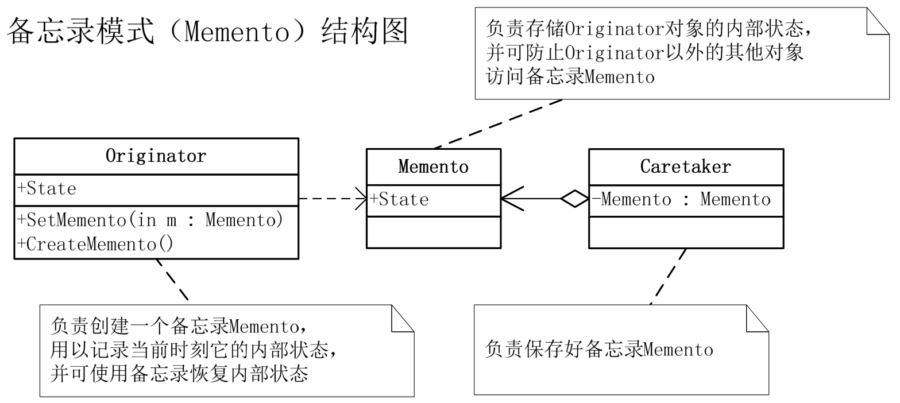
- Originator(发起人):负责创建一个备忘录 Memento,用以记录当前时刻它的内部状态,并可使用备忘录恢复内部状态。Originator 可根据需要决定 Memento 存储 Originator 的哪些内部状态。
- Memento(备忘录):负责存储 Originator 对象的内部状态,并可防止 Originator 以外的其他对象访问备忘录 Memento。备忘录有两个接口,Caretaker 只能看到备忘录的窄接口,它只能将备忘录传递给其他对象。Originator 能够看到一个宽接口,允许它访问返回到先前状态所需的所有数据。
- Caretaker(管理者):负责保存好备忘录 Memento,不能对备忘录的内容进行操作或检查。
# 模式评价
# 适用场景
- 必须保存某一时刻的状态以便需要时恢复时。
- 需要回滚、撤销等功能时。
# 实际应用
- 游戏副本存储。
- 编辑器的撤销操作。
- 数据库回滚、操作系统恢复等。
# 优点缺点
备忘录模式优点包括:
- 可以恢复到任意历史状态。
- 保持封装边界。
备忘录模式缺点包括:
- 状态数据很大时可能非常消耗资源。尤其是编辑器,如果一直不间断保存所有编辑记录,最终一篇稿子形成时将会消耗非常庞大的资源。
上次更新: 2025-02-06 00:56:14